

When it comes to dietary remedies for hypertension, bananas have long held the spotlight as the undisputed king of potassium. Walk into almost any doctor’s office or health seminar, and you’ll hear the same advice: “Eat more bananas to protect your heart.”
Bananas are a great source of potassium, but they are far from the single best source for lowering blood pressure. In fact, several everyday foods contain up to two to three times more potassium per serving than a medium banana—often with fewer carbohydrates and sugars.
This in-depth guide covers the physiological link between potassium and hypertension, breaks down the nutritional profile of bananas, compares them directly against potent dietary alternatives, and provides actionable dietary strategies to help optimize your cardiovascular health.
1. The Science: How Potassium Lowers Blood Pressure
To understand whether bananas deserve their legendary reputation, we first need to look at how potassium interacts with the human cardiovascular system.
High blood pressure (hypertension) is often driven by an excess of sodium in the bloodstream. Sodium causes the body to retain fluid, expanding total blood volume and increasing the hydrostatic force exerted against arterial walls.
       ┌─────────────────────────────────────────────────────────────┐
       │                   HIGH SODIUM INTAKE                        │
       │           (Water retention & expanded blood volume)         │
       └──────────────────────────────┬──────────────────────────────┘
                                      │
                                      ▼
       ┌─────────────────────────────────────────────────────────────┐
       │                  POTASSIUM INGESTION                        │
       └──────────────────────────────┬──────────────────────────────┘
                                      │
                ┌─────────────────────┴─────────────────────┐
                ▼                                           ▼
  1. Renal Natriuresis                        2. Direct Vasodilation
  (Kidneys flush out excess sodium            (Relaxes vascular smooth muscle
   & water via urine)                          walls, easing arterial tension)
                │                                           │
                └─────────────────────┬─────────────────────┘
                                      │
                                      ▼
       ┌─────────────────────────────────────────────────────────────┐
       │               REDUCED SYSTEMIC BLOOD PRESSURE               │
       └─────────────────────────────────────────────────────────────┘
Potassium serves as the natural physiological counterweight to sodium through two core mechanisms:
- Promoting Sodium Excretion (Natriuresis): Potassium signals the kidneys to filter out excess sodium through urine. As sodium leaves the body, excess water follows, directly reducing blood volume and arterial pressure.
- Relapsing Blood Vessel Walls: Potassium ions help relax the smooth muscle lining your blood vessels (vasodilation). Relaxed vessels expand, allowing blood to flow with lower resistance.
Clinical Fact: According to the American Heart Association (AHA), increasing potassium intake in adults with elevated blood pressure can reduce systolic blood pressure by an average of 4 to 8 mmHg, comparable to the effect of some single-medication therapies.
2. Bananas Under the Microscope: Nutritional Profile
A standard medium banana is convenient, portable, and naturally sweet. But how much potassium does it actually deliver?
Nutritional Breakdown of 1 Medium Banana (~118 grams)
| Nutrient | Amount | Daily Value (% DV) | Cardiovascular Relevance |
| Potassium | 422 mg | 9% | Supports sodium excretion |
| Magnesium | 32 mg | 8% | Promotes endothelial relaxation |
| Dietary Fiber | 3.1 g | 11% | Assists in lipid management |
| Vitamin C | 10.3 mg | 11% | Provides vascular antioxidant defense |
| Total Sugars | 14.4 g | N/A | Fast-acting carbohydrates |
| Total Calories | 105 kcal | N/A | Moderate-energy snack |
The Pros and Cons of Bananas for Blood Pressure
- The Good: Bananas are affordable, widely available year-round, require no prep work, and provide a healthy dose of dietary fiber, magnesium, and vitamin B6 alongside potassium.
- The Catch: A single medium banana provides roughly 422 mg of potassium—only 9% of the daily recommended intake for adults (4,700 mg/day under standard guidelines, or 3,400 mg for men / 2,600 mg for women under updated NIH DRI guidelines). Furthermore, bananas contain 14 to 15 grams of natural sugar. For individuals managing diabetes or metabolic syndrome alongside hypertension, relying solely on bananas for potassium can lead to unwanted blood sugar spikes.
3. The Myth vs. Reality: Are Bananas the “Best” Source?
The idea that bananas are the ultimate source of potassium is largely a cultural marketing success rather than a medical reality.
As shown in clinical nutritional databases, bananas rank significantly lower in potassium density compared to legumes, leafy greens, root vegetables, and seafood. While bananas are a good source, calling them the best is a dietary misconception.
4. 10 Foods That Outperform Bananas in Potassium
If you want to maximize your potassium intake while keeping sugar in check, these whole foods offer far higher concentrations of potassium per serving.
| Food Item | Serving Size | Potassium Content (mg) | % Daily Value (% DV) | Added Benefits for Blood Pressure |
| Cooked Beet Greens | 1 cup | 1,309 mg | 28% | Extremely high in dietary nitrates (boosts nitric oxide for vasodilation) |
| Cooked White Beans | 1 cup | 1,004 mg | 21% | Packed with soluble fiber and plant protein; zero sugar |
| Avocado | 1 whole | 975 mg | 21% | Rich in heart-healthy monounsaturated fats (oleic acid) |
| Baked Potato (with skin) | 1 medium | 926 mg | 20% | Provides resistant starch and fiber; double the potassium of a banana |
| Acorn Squash | 1 cup (cooked) | 896 mg | 19% | Rich in carotenoids and complex carbohydrates |
| Cooked Swiss Chard / Spinach | 1 cup | 839 mg | 18% | High in magnesium and folate |
| Coconut Water (Unsweetened) | 11 fl oz | 600–700 mg | 15% | Excellent electrolyte hydration source |
| Wild Salmon | 6 oz fillet | 624 mg | 13% | Loaded with Omega-3 fatty acids (EPA/DHA) that reduce inflammation |
| Sweet Potato | 1 medium (baked) | 542 mg | 12% | Low glycemic index, rich in beta-carotene |
| Medium Banana | 1 fruit | 422 mg | 9% | Baseline comparison |
Deep Dive into Top Contenders
1. Cooked Beet Greens & Spinach
Leafy greens are nutrient powerhouses. A single cup of cooked beet greens delivers more than 3 times the potassium of a banana. Additionally, greens like spinach, Swiss chard, and beet greens are high in magnesium and inorganic nitrates, which convert to nitric oxide in the body to dilate blood vessels.
2. Avocados
Avocados offer a double win for cardiovascular health. One whole avocado provides nearly 1,000 mg of potassium alongside heart-healthy monounsaturated fats that lower LDL cholesterol and improve arterial flexibility.
3. Potatoes and Sweet Potatoes
Don’t fear the potato skin! A simple baked potato with the skin intact contains over 900 mg of potassium. Keeping the skin on preserves the fiber content, slowing digestion and preventing rapid blood sugar spikes.
5. Daily Potassium Requirements and the Sodium-Potassium Ratio
To effectively manage blood pressure, looking at potassium in isolation is not enough. The key metric is your Sodium-to-Potassium Ratio.
    HIGH SODIUM + LOW POTASSIUM   =  Vascular Stiffness & Elevated Blood Pressure
    BALANCED SODIUM + HIGH POTASSIUM =  Optimal Fluid Balance & Healthy Arterial Pressure
Recommended Intake Targets
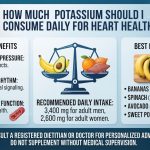
- Potassium Target: The National Academies of Sciences, Engineering, and Medicine (NASEM) recommends 2,600 mg/day for adult females and 3,400 mg/day for adult males, while the American Heart Association recommends aiming closer to 3,500–4,700 mg/day for therapeutic blood pressure reduction.
- Ideal Sodium-to-Potassium Ratio: Clinical studies suggest aiming for a ratio of 1:2 or better (consuming at least twice as much potassium as sodium).
- The Modern Western Diet Problem: The average Western diet contains an inverted ratio of approximately 2:1 (sodium to potassium) due to ultra-processed foods, directly contributing to widespread hypertension.
6. Risks, Precautions, and Medical Contraindications
While boosting dietary potassium is beneficial for most people, it can be dangerous for certain individuals.
1. Chronic Kidney Disease (CKD)
The kidneys filter out excess potassium. In individuals with impaired kidney function or kidney disease, the body cannot clear potassium effectively. Consuming high-potassium foods can lead to hyperkalemia (excessive blood potassium levels).
2. Hyperkalemia Symptoms & Hazards
Hyperkalemia can cause subtle or life-threatening symptoms:
- Muscle weakness and fatigue
- Numbness or tingling sensations
- Nausea and vomiting
- Cardiac arrhythmias (irregular heartbeat, bradycardia, or sudden cardiac arrest)
3. Drug-Nutrient Interactions
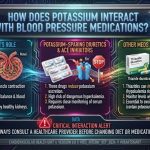
Certain prescription blood pressure medications alter how your body handles potassium:
- ACE Inhibitors (e.g., Lisinopril, Enalapril): Reduce potassium excretion in urine.
- ARBs (e.g., Losartan, Valsartan): Decrease aldosterone activity, causing potassium retention.
- Potassium-Sparing Diuretics (e.g., Spironolactone, Triamterene): Prevent the kidneys from flushing out potassium.
Safety Rule: If you are taking any of these medications or have renal impairment, consult your physician or a registered dietitian before significantly increasing your dietary potassium or taking potassium supplements.
7. Practical Tips to Boost Dietary Potassium
Increasing your daily potassium intake doesn’t require drastic dietary changes. Here are simple, practical meal swaps you can start making today:
- Upgrade Your Breakfast: Swap a sugar-laden banana smoothie for a green smoothie made with spinach, half an avocado, unsweetened coconut water, and unsweetened Greek yogurt.
- Smart Lunch Sides: Replace french fries or white rice with a baked sweet potato or a side salad featuring cooked white beans and avocado.
- Dinner Enhancements: Sauté beet greens or Swiss chard in olive oil and garlic as a side dish for grilled wild salmon.
- Snack Alternatives: Keep edamame (steamed soybeans) or pumpkin seeds on hand for a low-sodium, high-potassium snack.
8. Frequently Asked Questions (FAQ)
1. Are bananas good for blood pressure?
Yes, bananas are good for blood pressure because they contain 422 mg of potassium per medium fruit, along with fiber and magnesium. However, they are not the most concentrated source available and should be part of a broader, diet-rich selection of high-potassium foods.
2. How many bananas would I need to eat to get my daily potassium?
To reach the recommended 3,400–4,700 mg of potassium per day exclusively from bananas, you would need to eat 8 to 11 medium bananas daily. Doing so would supply excessive sugar (over 120 grams) and calories, which is why diversifying your diet with vegetables, beans, and seeds is far healthier.
3. Which fruit has more potassium than a banana?
Several fruits have more potassium than a banana per serving, including avocados (~975 mg per whole fruit), cantaloupe (~473 mg per cup), guava (~688 mg per cup), and pomegranates (~666 mg per fruit).
4. Can potassium supplements replace high-potassium foods for blood pressure?
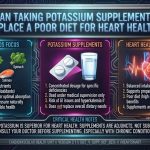
No. Over-the-counter potassium supplements are strictly regulated in the U.S. and usually limited to 99 mg per pill due to the risk of small bowel lesions and cardiac toxicity. Whole foods provide far higher, safer doses of potassium alongside synergistic nutrients like fiber and antioxidants.
5. Does cooking lower the potassium content in vegetables?
Boiling vegetables in water can cause potassium to leach out into the cooking liquid by up to 30–50%. To preserve potassium, opt for steaming, microwaving, roasting, or consuming the cooking liquid (such as in soups or stews).
6. How fast does potassium lower blood pressure?
When consumed through whole foods, potassium works gradually. While an acute dose can promote sodium excretion over several hours, consistent dietary habits over 2 to 4 weeks are typically required to observe a stable, measurable reduction in resting blood pressure.
7. Can eating too many bananas cause hyperkalemia in a healthy person?
In a person with healthy, fully functioning kidneys, eating a few bananas a day will not cause hyperkalemia, as the kidneys quickly filter out excess potassium. Hyperkalemia from food is almost exclusively a risk for individuals with advanced kidney disease or those taking potassium-retaining medications.
8. Is potassium effective for both systolic and diastolic blood pressure?
Yes. Clinical trials (including meta-analyses of DASH diet studies) show that increasing dietary potassium effectively lowers both systolic and diastolic blood pressure, with the most pronounced drops observed in individuals with high baseline sodium intake.
9. What is better for lowering blood pressure: bananas or coconut water?
An 11 oz container of pure, unsweetened coconut water provides 600 to 700 mg of potassium with fewer solid carbohydrates than a banana, making it a more concentrated liquid option. However, bananas provide more dietary fiber. Both are beneficial when integrated into a balanced diet.
10. How does potassium compare to magnesium for blood pressure control?
Potassium and magnesium work synergistically. While potassium primarily regulates fluid volume and sodium excretion through the kidneys, magnesium acts directly on arterial smooth muscle as a natural calcium channel blocker. Both minerals are essential for optimal cardiovascular function.
9. Conclusion
Are bananas the best source of potassium for lowering blood pressure? No—they are a convenient and healthy option, but far from the best.
While a medium banana provides a helpful 422 mg of potassium, foods like beet greens, white beans, avocados, baked potatoes, and spinach offer significantly higher amounts of potassium with lower sugar profiles.
To achieve optimal blood pressure readings naturally, aim for a diverse, plant-rich diet that emphasizes a variety of whole foods, reduces sodium intake, and keeps you well-hydrated. Always consult with your healthcare provider before making major dietary adjustments, especially if you take blood pressure medications or have underlying kidney conditions.


