

In an era of fast-paced lifestyles across major U.S. metropolitan hubs—from busy financial professionals in New York and tech leaders in San Francisco, Silicon Valley, and Seattle, to active communities in Los Angeles and Austin—convenience often dictates daily nutrition. Processed meals high in sodium and low in fresh produce have created widespread dietary imbalances.
To compensate, many individuals turn to dietary supplements. Potassium, a vital mineral and electrolyte fundamental to cardiovascular function, is frequently viewed as a potential quick fix for high blood pressure and dietary deficits.
However, a fundamental health question remains: Can taking potassium supplements actually replace a potassium-rich, whole-food diet for long-term heart health?
This comprehensive guide provides an in-depth, evidence-based analysis of potassium’s role in the cardiovascular system, evaluates natural food sources versus over-the-counter supplements, reviews cardiovascular health products, offers actionable dietary strategies, and answers the top 10 frequently asked questions about potassium and heart health.
Executive Summary & Core Verdict
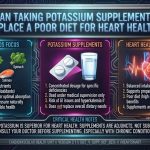
No, potassium supplements cannot replace a wholesome, nutrient-dense diet for cardiovascular health.
While over-the-counter (OTC) potassium supplements exist, they are legally limited in dosage (typically capped at 99 mg per serving in the United States) to prevent severe gastrointestinal and cardiac risks. In contrast, the recommended daily intake of potassium for adults ranges between 2,600 mg and 3,400 mg.
Relying solely on pills to meet your daily requirement would require taking dozens of tablets daily, which significantly increases the risk of local gut ulceration and dangerous electrolyte spikes without delivering the synergistic fiber, antioxidants, and secondary minerals (like magnesium) found naturally in whole foods.
1. The Physiological Engine: How Potassium Protects the Heart
Potassium ($K^+$) is an essential mineral that functions as a major intracellular cation in human biology. Every heartbeat, vascular contraction, and nerve signal relies heavily on precise cellular potassium concentrations.
+-----------------------------------------------------------------------------------+
|                           THE SODIUM-POTASSIUM PUMP (Na+/K+-ATPase)               |
|                                                                                   |
|      [ Extracellular Space: High Na+ ]          [ Intracellular Space: High K+ ]  |
|                                                                                   |
|                 ◄── 3 Na+ Ions Pumped OUT                                         |
|                 ──► 2 K+  Ions Pumped IN  (Consumes ATP Energy)                  |
+-----------------------------------------------------------------------------------+
                                          |
                                          v
+-----------------------------------------------------------------------------------+
|                             CARDIOVASCULAR EFFECTS                                |
|   • Smooth Muscle Relaxation  ──► Vasodilation (Lower Peripheral Resistance)     |
|   • Increased Renal Excretion ──► Natriuresis (Flushes Excess Sodium in Urine)   |
|   • Electrical Stabilization  ──► Regulates SA/AV Node Cardiac Action Potential  |
+-----------------------------------------------------------------------------------+
The Sodium-Potassium Counter-Balance
Cardiovascular health depends on maintaining an optimal balance between sodium and potassium. Modern diets frequently contain excess sodium (often exceeding 3,400 mg daily) alongside insufficient potassium intake.
- Natriuresis (Sodium Excretion): High potassium intake signals the kidneys to excrete excess sodium through urine. As sodium leaves the body, fluid volume in the bloodstream decreases, directly reducing pressure on artery walls.
- Vascular Smooth Muscle Relaxation: Potassium promotes vasodilation—the widening of blood vessels—by relaxing the smooth muscle lining arterial walls. This reduces systemic vascular resistance, making it easier for the heart to pump blood.
- Electrical Conduction and Rhythm: The heart’s pacemaker (the sinoatrial node) relies on dynamic potassium fluxes across muscle cell membranes to generate action potentials. Maintaining stable extracellular potassium levels prevents cardiac arrhythmias (irregular heartbeats).
2. Food Matrix vs. Isolated Supplements: Why Whole Foods Prevail
Understanding why a pill cannot replace a meal requires examining the concept of the food matrix. Nutrition is not merely the sum of isolated chemical compounds; it operates through complex biological synergy.
+-----------------------------------------------------------------------------------+
|                               THE FOOD MATRIX ADVANTAGE                           |
+-----------------------------------------------------------------------------------+
                                          |
        +---------------------------------+---------------------------------+
        |                                                                   |
        v                                                                   v
[ WHOLE FOOD SOURCE (e.g., Avocado / Spinach) ]         [ ISOLATED POTASSIUM SUPPLEMENT ]
  ├── 800mg–1,000mg Bioavailable Potassium                 ├── Capped at 99mg per capsule
  ├── Soluble & Insoluble Dietary Fiber                    ├── Zero dietary fiber
  ├── Magnesium & Bioflavonoids                           ├── Lacks secondary synergists
  ├── Slow, Steady Gastrointestinal Absorption             ├── Sharp, localized mucosal release
  └── Alkalizing Organic Salts (Citrate / Malate)          └── Synthetic Mineral Salts
Why Supplements Fall Short
- The 99 mg Regulatory Limit: In the United States, the Food and Drug Administration (FDA) restricts over-the-counter potassium supplements to less than 100 mg (typically 99 mg) of elemental potassium per dose. This restriction exists because concentrated potassium chloride tablets can cause localized mucosal lesions, ulcers, and bleeding in the stomach and small intestine.
- Lack of Dietary Fiber: Whole foods high in potassium—such as sweet potatoes, leafy greens, legumes, and avocados—are rich in dietary fiber. Fiber slows digestion, improves glycemic control, binds to dietary cholesterol, and feeds beneficial gut microflora that produce short-chain fatty acids (SCFAs), which further reduce arterial inflammation.
- Synergistic Co-Factors: Whole plants deliver potassium alongside magnesium, calcium, vitamin C, and polyphenols. Magnesium is specifically required for the proper functioning of the $Na^+/K^+$-ATPase pump. Without adequate magnesium, cells struggle to retain potassium, rendering supplementation far less effective.
- Alkalizing Anions: Potassium in fruits and vegetables is naturally bound to precursor organic anions like citrate and malate. These compound bases neutralize dietary acid loads, helping preserve bone mineral density and vascular compliance. In contrast, many synthetic supplements utilize potassium chloride, which does not offer the same alkalizing benefits.
3. Comprehensive Comparison: Whole Foods vs. OTC Supplements vs. Prescription Formulations
Evaluating how various delivery formats perform across critical health parameters highlights the advantages of dietary sources:
| Evaluation Metric | Whole Food Sources (Leafy Greens, Legumes, Bananas) | Over-the-Counter (OTC) Potassium Supplements | Prescription-Grade Potassium (e.g., K-Dur, Micro-K) |
| Typical Dose per Unit | 400 mg – 1,000 mg per serving | 99 mg per tablet/capsule | 800 mg – 1,500 mg (20 mEq) controlled-release |
| Primary Potassium Form | Natural Citrate, Malate, Phosphate | Potassium Chloride, Gluconate, Citrate | Extended-Release Potassium Chloride |
| Gastrointestinal Ulcer Risk | Zero | Moderate if taken in excess on empty stomach | Low to Moderate (Mitigated by micro-encapsulation) |
| Accompanying Fiber & Nutrients | High (Fiber, Magnesium, Polyphenols) | None | None |
| Sustained Absorption Rate | Optimized by digestive matrix | Rapid dissolution | Slow-release matrix architecture |
| Primary Clinical Indication | Daily dietary nutrition & prevention | Minor dietary top-up | Treatment of medically diagnosed hypokalemia |
| Medical Supervision Required | No (Safe for healthy kidneys) | No, but caution advised | Yes (Strict lab monitoring required) |
4. Product & Resource Reviews: Tools for Cardiovascular Wellness
While dietary sources remain paramount, specific cardiovascular tracking tools, natural food powders, and salt alternatives can assist individuals in managing their sodium-to-potassium balance safely.
1. Salt Alternatives (e.g., Nu-Salt, NoSalt Potassium Chloride Blends)
- Best For: Home cooks seeking to lower sodium intake while naturally boosting potassium levels during meal preparation.
- Mechanism: Replaces sodium chloride ($NaCl$) with potassium chloride ($KCl$), providing a familiar salty flavor profile without contributing to sodium-induced fluid retention.
- Review & Assessment: Salt substitutes deliver significant amounts of potassium (often 300 mg to 500 mg per quarter-teaspoon). They are highly effective for sodium reduction, but individuals with kidney conditions or those taking blood pressure medications (like ACE inhibitors or ARBs) must consult a physician before use due to hyperkalemia risks.
2. Whole-Food Plant Powders (e.g., Freeze-Dried Organic Spinach & Beet Powders)
- Best For: Busy professionals in metropolitan areas looking to supplement whole-food intake on the go.
- Mechanism: Concentrated whole vegetables preserved via freeze-drying to retain natural fiber, potassium, and dietary nitrates.
- Review & Assessment: Unlike synthetic isolated mineral capsules, organic vegetable powders retain the natural plant matrix. Mixing a scoop of organic spinach or kale powder into a smoothie yields 300 mg–600 mg of bioavailable potassium alongside natural dietary nitrates that support endothelial nitric oxide production.
3. Smart Blood Pressure Monitors with Dietary Logging (e.g., Omron Evolv / Withings BPM Connect)
- Best For: Tracking real-time cardiovascular responses to sodium-reduction and potassium-enrichment strategies.
- Mechanism: Upper-arm blood pressure cuffs that sync directly with health platforms to correlate dietary adjustments with resting blood pressure trends.
- Review & Assessment: Highly beneficial for visualizing the direct impact of high-potassium eating plans (such as the DASH diet) on systolic and diastolic blood pressure over 30 to 90 days.
5. Dietary Strategy: Top Potassium-Dense Whole Foods
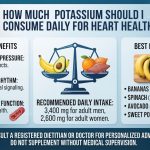
Meeting your daily target—2,600 mg for adult women and 3,400 mg for adult men—is straightforward when incorporating potassium-rich foods into daily meals.
+-----------------------------------------------------------------------------------+
|                        POTASSIUM DENSITY IN WHOLE FOODS                           |
+-----------------------------------------------------------------------------------+
  Cooked Beet Greens (1 cup)   [ 1,300 mg ]  ====================================
  Cooked Swiss Chard (1 cup)   [ 960 mg   ]  ==============================
  Baked Sweet Potato (1 med)   [ 700 mg   ]  ======================
  Cooked White Beans (1/2 cup) [ 500 mg   ]  ===============
  Avocado (1/2 medium)         [ 480 mg   ]  ==============
  Medium Banana                [ 422 mg   ]  ===========
High-Yield Dietary Options
- Cooked Beet Greens & Swiss Chard: Among the most concentrated dietary sources available, providing nearly 1,000 mg of potassium per cooked cup along with vitamin K and magnesium.
- Baked Sweet Potatoes (With Skin): A single medium sweet potato yields approximately 700 mg of potassium alongside complex carbohydrates and beta-carotene.
- Legumes (White Beans, Edamame, Lenses): One cup of cooked white beans delivers over 1,000 mg of potassium, combined with soluble fiber that supports healthy cholesterol levels.
- Avocados: Half an avocado provides roughly 480 mg of potassium along with heart-healthy monounsaturated fats that aid in absorbing fat-soluble vitamins.
- Wild-Caught Salmon: A 6-ounce fillet provides over 600 mg of potassium alongside anti-inflammatory Omega-3 fatty acids ($EPA/DHA$).
6. Actionable Steps: Transitioning to a Heart-Healthy Dietary Pattern
Follow this practical roadmap to optimize your sodium-to-potassium ratio safely:
[ Step 1: Calculate Baseline Sodium & Potassium ] ──► [ Step 2: Adopt the DASH Eating Plan ]
                                                                      │
                                                                      ▼
[ Step 5: Track Blood Pressure Trends ] ◄── [ Step 4: Add Potassium Power Snacks ] ◄── [ Step 3: Swap Processed Salts ]
Step 1: Assess Your Current Intake
Use a nutritional tracking application for 3 to 5 days to log your food intake. Compare your daily sodium consumption against your potassium intake to evaluate your current ratio. An ideal sodium-to-potassium ratio is approximately 1:2.
Step 2: Implement the DASH Diet Structure
Adopt the Dietary Approaches to Stop Hypertension (DASH) framework, which focuses on 4 to 5 servings of vegetables, 4 to 5 servings of fruits, and 2 to 3 servings of low-fat dairy or fortified plant alternatives daily.
Step 3: Replace Refined Snacks with Whole Foods
Swap processed high-sodium packaged snacks for potassium-rich alternatives:
- Replace potato chips with raw unsalted pumpkin seeds or almonds.
- Swap afternoon energy bars for a fresh banana paired with almond butter or half an avocado on whole-grain toast.
Step 4: Prepare High-Potassium Meals
Incorporate leafy greens into dinner preparations. Steaming or sautéing spinach, kale, or Swiss chard reduces volume, making it easy to consume higher nutrient densities per serving.
Step 5: Consult a Healthcare Provider Before Supplementation
Always consult a physician or registered dietitian before attempting high-dose potassium supplementation or using salt substitutes, particularly if you have underlying kidney conditions or take cardiovascular medications.
7. 10 Frequently Asked Questions (FAQ)
1. Why are over-the-counter potassium supplements limited to only 99 mg in the U.S.?
The FDA caps over-the-counter potassium supplements at 99 mg of elemental potassium to protect consumers from gastrointestinal ulceration, mucosal lesions, and accidental hyperkalemia (dangerously high blood potassium levels), which can cause sudden cardiac arrest.
2. Can taking too much potassium cause heart problems?
Yes. Excess potassium in the blood—a condition known as hyperkalemia—disrupts the electrical signals that regulate the heartbeat. This can cause muscle weakness, numbness, cardiac arrhythmias, and, in severe cases, fatal cardiac arrest.
3. How much potassium do I actually need each day?
According to the National Academies of Sciences, Engineering, and Medicine, the Adequate Intake (AI) for potassium is 2,600 mg daily for adult females and 3,400 mg daily for adult males.
4. Are bananas the absolute best source of potassium?
While bananas are a convenient source (providing about 422 mg per medium fruit), they are not the highest. Foods like beet greens, Swiss chard, baked sweet potatoes, white beans, avocados, and coconut water contain more potassium per serving than bananas.
5. What medications interact negatively with potassium supplements?
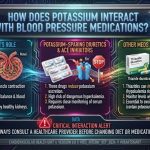
Potassium supplements can interact with several common medications, including ACE inhibitors (e.g., lisinopril), ARBs (e.g., losartan), and potassium-sparing diuretics (e.g., spironolactone). These medications decrease renal potassium excretion, raising the risk of hyperkalemia if paired with supplements.
6. How do I know if my blood potassium levels are normal?
Blood potassium levels are evaluated through a standard blood panel called a Basic Metabolic Panel (BMP) or Comprehensive Metabolic Panel (CMP). A normal serum potassium level generally ranges from 3.5 to 5.0 mEq/L.
7. Who is most at risk for developing high blood potassium (hyperkalemia)?
Individuals with chronic kidney disease (CKD), end-stage renal disease, type 1 diabetes, heart failure, or those taking potassium-retaining cardiovascular medications face the highest risk because their kidneys cannot clear excess potassium efficiently.
8. Does cooking vegetables reduce their potassium content?
Yes. Potassium is a water-soluble mineral. Boiling vegetables causes a significant amount of potassium to leach into the cooking water. To preserve potassium, opt for steaming, roasting, microwaving, or consuming the cooking liquid in soups and stews.
9. Can a high-potassium diet help lower high blood pressure?
Yes. Numerous clinical trials, including studies on the DASH diet, demonstrate that increasing dietary potassium intake while lowering sodium consumption significantly reduces both systolic and diastolic blood pressure in individuals with hypertension.
10. Are potassium salt substitutes safe for everyone?
No. While salt substitutes (potassium chloride) are useful for healthy adults looking to reduce sodium, they can be dangerous for individuals with kidney disease, diabetes, or those taking blood pressure medications that impair potassium excretion. Always seek medical guidance before using them.
Conclusion
While dietary supplements offer convenience for specific nutritional deficiencies, potassium supplements cannot replace a wholesome, whole-food diet for heart health.
The legal dosage caps on over-the-counter supplements make them impractical for meeting daily nutritional targets. More importantly, isolated mineral tablets lack the essential fiber, antioxidants, and secondary minerals—such as magnesium—that work synergistically in whole foods to protect arterial walls, regulate blood pressure, and maintain stable cardiac rhythms.
For residents across Texas, New York, California, Washington, San Francisco, and beyond, long-term cardiovascular resilience is best achieved in the kitchen, not the supplement aisle. Emphasizing fresh leafy greens, legumes, root vegetables, avocados, and low-sodium whole foods remains the most safe, proven, and effective strategy for supporting lifelong heart health.


