

Whether it is a high-stakes corporate presentation, a sudden personal crisis, or intense urban traffic, acute stress can cause blood pressure to surge within seconds.
For millions of Americans across major metropolitan hubs—from the fast-paced financial districts of New York and San Francisco to tech corridors in Washington, California, and Texas—managing acute stress responses is a vital health priority.
When faced with a sudden, stress-induced blood pressure spike, many people look for rapid, non-pharmacological remedies. Is there an immediate, evidence-based solution that can lower your numbers within minutes?
This article explores the physiological mechanisms behind stress surges, compares popular immediate interventions, outlines a step-by-step emergency relaxation protocol, and clarifies when a spike requires immediate emergency care.
1. The Physiology of a Stress-Induced Blood Pressure Spike
To lower elevated blood pressure rapidly, it helps to understand what causes the surge in the first place.
When your brain perceives a threat or intense stressor, the amygdala alerts the hypothalamus, triggering the Sympathetic Nervous System (SNS)—commonly known as the “fight-or-flight” response.
       ┌─────────────────────────────────────────────────────────────┐
       │                   ACUTE STRESS TRIGGER                      │
       │         (Work presentation, argument, road rage)            │
       └──────────────────────────────┬──────────────────────────────┘
                                      │
                                      ▼
       ┌─────────────────────────────────────────────────────────────┐
       │             SYMPATHETIC NERVOUS SYSTEM ACTIVATED            │
       │       (Adrenaline & Cortisol surge into blood stream)       │
       └──────────────────────────────┬──────────────────────────────┘
                                      │
                ┌─────────────────────┴─────────────────────┐
                ▼                                           ▼
  1. Artery Vasoconstriction                 2. Increased Cardiac Output
  (Blood vessels narrow dramatically)        (Heart rate accelerates rapidly)
                │                                           │
                └─────────────────────┬─────────────────────┘
                                      │
                                      ▼
       ┌─────────────────────────────────────────────────────────────┐
       │           SUDDEN STRESS-INDUCED BP SPIKE                    │
       │         (e.g., Rising from 120/80 to 155/95 mmHg)           │
       └─────────────────────────────────────────────────────────────┘
This hormonal cascade causes two immediate physical changes:
- Vasoconstriction: Smooth muscles surrounding small blood vessels contract, narrowing the pathway for blood flow.
- Elevated Cardiac Output: Your heart pumps faster and with greater contractile force.
Pumping a higher volume of blood through narrowed blood vessels causes a sharp increase in systolic (top number) and diastolic (bottom number) readings.
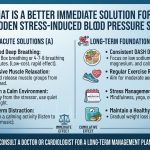
2. The Absolute Best Immediate Solution: Vagal Nerve Activation via Slow Deep Breathing
When evaluating fast-acting interventions for a stress surge, one method consistently outperforms dietary supplements, tea, or cold water: controlled, slow deep breathing to stimulate the vagus nerve.
Why Deep Breathing Works Instantly
The vagus nerve is the primary driver of the Parasympathetic Nervous System (PNS)—the body’s natural “rest and digest” control center.
When you deliberately extend your exhalation, you activate the vagus nerve, which releases acetylcholine. This neurotransmitter acts as a brake on the heart, instructing cardiac muscle cells to slow down and signaling blood vessel walls to relax.
Clinical Reality: While dietary interventions (like drinking beet juice or coconut water) require 1 to 3 hours to digest and impact blood pressure, deep breathing works on a physiological feedback loop that can lower systolic pressure by 10 to 15 mmHg within 5 to 10 minutes.
3. Comparison of Immediate Solutions for Stress Spikes
To find the fastest, most effective option during an acute surge, consider how various popular home remedies stack up against each other:
| Immediate Remedy | Onset of Action | Estimated Systolic Reduction | Primary Physiological Mechanism | Practicality in a Sudden Spike |
| Controlled Deep Breathing | 3 to 5 Minutes | 8 – 15 mmHg | Direct vagal nerve activation & parasympathetic shift | Extremely High (Can be done anywhere, anytime) |
| Isometric Handgrip Exercise | 10 to 15 Minutes | 4 – 10 mmHg | Autonomic reflex modification & shear stress nitric oxide release | Moderate (Requires an isometric grip device) |
| Cold Water Facial Immersion | 2 to 5 Minutes | Variable / Initial Spike then Drop | Mammalian dive reflex triggering vagal bradycardia | Low to Moderate (Requires sink/ice bowl, can cause initial shock) |
| Hibiscus or Chamomile Tea | 45 to 90 Minutes | 3 – 6 mmHg | Mild ACE inhibition & smooth muscle relaxation | Low (Takes time to brew, digest, and absorb) |
| Hydration (16 oz Water) | 20 to 45 Minutes | 5 – 10 mmHg (if dehydrated) | Reduces blood viscosity and normalizes vasopressin | Moderate (Only effective if spike is driven by dehydration) |
| Prescription Rescue Meds | 15 to 30 Minutes | Major Clinical Reduction | Direct enzymatic / calcium channel blockade | High (For diagnosed patients with specific medical orders) |
4. Step-by-Step Guided Protocols for Immediate Relief
If you feel your chest tighten, heart race, or face flush due to acute stress, stop what you are doing and follow one of these evidence-based breathing protocols.
Protocol A: The Physiological Sigh (Fastest Method)
Popularized by neurobiologists, the “physiological sigh” is the body’s fastest built-in autonomic reset.
1.Double Inhale Through the Nose:Duration: 2-3 seconds.
Take a deep breath in through your nose, then immediately top it off with a second, short burst inhale to fully inflate the alveoli in your lungs.
2.Long, Slow Exhale Through the Mouth:Duration: 5-8 seconds.
Pucker your lips and exhale slowly until your lungs feel completely empty. Make the exhalation twice as long as the double inhale.
3.Repeat for 2 to 3 Minutes:Cycles: 5-10 repetitions.
Repeat this cycle 5 to 10 times. You will feel your heart rate drop and your blood vessels relax almost immediately.
Protocol B: The 4-7-8 Relaxation Breath
Developed by integrative health experts, this technique slows rapid heart rate and reduces stress-induced vasoconstriction.
- Inhale quietly through your nose for 4 seconds.
- Hold your breath comfortably for 7 seconds.
- Exhale forcefully through your mouth, making a “whoosh” sound, for 8 seconds.
- Repeat for 4 complete breath cycles.
5. Other Actionable Physical Techniques
If you are in an environment where you can combine deep breathing with physical adjustments, these complementary techniques can enhance the effect:
1. Progressive Muscle Relaxation (PMR)
Stress causes systemic muscle tension, which squeezes peripheral blood vessels and raises vascular resistance.
- Sit comfortably in a quiet chair.
- Tense your foot muscles tightly for 5 seconds, then release completely while exhaling.
- Move upward through your calves, thighs, abdomen, chest, shoulders, and jaw.
- The sudden release of muscular tension sends feedback to the central nervous system to dilate peripheral blood vessels.
2. Lie Down with Legs Elevated
If you feel lightheaded alongside an acute spike, lie flat on your back and elevate your legs slightly on a pillow or wall. This position improves venous return to the heart without triggering a compensatory surge in sympathetic adrenaline.
6. What NOT to Do During a Sudden Stress Spike
When blood pressure surges unexpectedly, avoiding common mistakes is just as important as knowing what to do:
- ✘ Do NOT Panic or Constantly Re-Measure Every 30 Seconds: Re-checking your blood pressure repeatedly creates an “anxiety-spike loop,” where fear of a high reading raises adrenaline and keeps pressure elevated. Wait at least 10 to 15 minutes after starting deep breathing before taking another reading.
- ✘ Do NOT Perform Intense Cardio Exercises: Attempting to “burn off” a stress spike with heavy weightlifting or high-intensity sprints during an acute surge places added pressure on your cardiovascular system.
- ✘ Do NOT Consume Unprescribed Medications or Extra Pills: Taking an extra dose of prescription blood pressure medication without a doctor’s explicit instructions can cause an unpredictable, dangerous drop in blood pressure (hypotension).
- ✘ Do NOT Consume Alcohol, Nicotine, or Caffeine: Reaching for a cigarette, coffee, or energy drink will further stimulate the nervous system, exacerbating the spike.
7. Medical Warning: When a Spike Becomes an Emergency
A stress-induced spike usually resolves within 20 to 45 minutes as adrenaline breaks down in the bloodstream. However, if your reading remains extremely high or is accompanied by physical symptoms, it may indicate a Hypertensive Crisis.
CRITICAL HYPERTENSION THRESHOLD: A reading of 180 mmHg Systolic or higher OR 120 mmHg Diastolic or higher is considered a hypertensive crisis.
┌─────────────────────────────────────────────────────────────────────────┐
│                     HYPERTENSIVE CRISIS SYMPTOMS                        │
├─────────────────────────────────────────────────────────────────────────┤
│ Seek IMMEDIATE emergency medical evaluation (Call 911) if a spike is    │
│ accompanied by any of the following symptoms:                           │
│                                                                         │
│ • Severe chest pain, pressure, or tightness                             │
│ • Shortness of breath or difficulty catching your breath                │
│ • Sudden severe "thunderclap" headache                                  │
│ • Neurological deficits (numbness, weakness, facial drooping)           │
│ • Visual disturbances (blurred vision, double vision, partial blindness)│
│ • Confusion, disorientation, or difficulty speaking                     │
└─────────────────────────────────────────────────────────────────────────┘
8. Lifestyle Strategies to Prevent Acute Stress Spikes
To prevent acute stress spikes from recurring, build resilience into your routine with these evidence-based practices:
                  ┌──────────────────────────────────────────────┐
                  │    STRESS RESILIENCE MAINTENANCE PILLARS     │
                  └──────────────────────┬───────────────────────┘
                                         │
        ┌──────────────────┬─────────────┴────────────┬──────────────────┐
        ▼                  ▼                          ▼                  ▼
┌───────────────┐  ┌───────────────┐          ┌───────────────┐  ┌───────────────┐
│ DAILY MEDITATION│ │ ZONE 2 AEROBIC│          │ BIOFEEDBACK   │  │ SLEEP HYGIENE │
│ 10-15 mins/day│  │ 150 mins/week │          │ HR Variability│  │ 7-9 Hours/Night│
│ Relaxes SNS   │  │ Expands vessel│          │ Tracks autonomic│ Reduces resting│
│ baseline      │  │ compliance    │          │ balance       │ cortisol       │
└───────────────┘  └───────────────┘          └───────────────┘  └───────────────┘
- Daily Mindfulness or Meditation: Practicing 10 to 15 minutes of daily mindfulness lowers baseline sympathetic nervous system activity, making you less reactive to stress.
- Zone 2 Cardio Training: Moderate aerobic exercise (like brisk walking or cycling) strengthens blood vessels and improves endothelial flexibility, dampening the impact of sudden adrenaline surges.
- Magnesium and Potassium Optimization: Consuming a whole-food diet rich in magnesium (leafy greens, dark chocolate, seeds) and potassium (avocados, sweet potatoes, legumes) helps maintain smooth muscle relaxation in blood vessel walls.
9. Frequently Asked Questions (FAQ)
1. How quickly can deep breathing lower a blood pressure spike?
Controlled deep breathing begins lowering heart rate and vascular resistance within 30 to 60 seconds. Measurable reductions in blood pressure typically occur within 5 to 10 minutes of continuous, slow breathing.
2. Can stress raise blood pressure even if I don’t have hypertension?
Yes. Individuals with normal baseline blood pressure can experience sharp, temporary surges during acute stress or panic attacks. While these spikes usually resolve once the stressor passes, frequent surges over time can damage blood vessels.
3. Does drinking cold water help lower a stress blood pressure spike?
Drinking a glass of room-temperature or cool water can help if your blood pressure spike is partly driven by dehydration. Additionally, splashing cold water on your face can trigger the mammalian dive reflex, which slows heart rate via vagal activation. However, drinking water alone is not as effective as targeted deep breathing.
4. Why should I wait 15 minutes before re-measuring my blood pressure?
Anxiety about high blood pressure readings often triggers a secondary adrenaline rush. Waiting 15 minutes allows your parasympathetic nervous system time to lower your heart rate and dilate blood vessels, giving you a more accurate reading.
5. Can an anxiety attack cause blood pressure to reach 180/120 mmHg?
Yes. Severe anxiety or panic attacks can cause dramatic spikes into the hypertensive crisis range (>180/120 mmHg). If you have no chest pain, shortness of breath, or neurological symptoms, sit quietly, practice deep breathing for 15 minutes, and re-check. If the reading stays above 180/120 mmHg, seek emergency care.
6. Are there any fast-acting herbal teas for a stress spike?
Teas like hibiscus, chamomile, or valerian root have mild relaxing properties and can aid in overall calm. However, because they must be brewed and digested, they take 45 to 90 minutes to exert systemic effects, making them far slower than deep breathing.
7. Should I take an extra blood pressure pill if my reading spikes from stress?
No, never adjust your medication dosage without explicit instructions from your doctor. Taking unprescribed extra doses can cause severe hypotension, dizziness, or fainting hours later when your body’s stress hormones naturally clear.
8. What is the physiological sigh, and why is it recommended?
The physiological sigh is a pattern of two rapid inhales followed by one long, extended exhale. It quickly inflates collapsed air sacs (alveoli) in the lungs and maximizes carbon dioxide offloading, triggering a rapid parasympathetic shift that slows heart rate.
9. How does stress-induced hypertension differ from chronic hypertension?
Stress-induced hypertension refers to temporary, acute surges in blood pressure caused by adrenaline and nervous system activation. Chronic hypertension is a persistent, long-term elevation in arterial pressure caused by arterial stiffness, kidney dysfunction, or structural changes in blood vessels.
10. Can biofeedback devices help me control sudden stress spikes?
Yes. Biofeedback tools and smartwatches that measure Heart Rate Variability (HRV) can train you to recognize stress surges early and use controlled breathing to regain autonomic balance before your blood pressure spikes significantly.
10. Final Summary
When managing a sudden stress-induced blood pressure surge, the best immediate solution is vagal nerve activation through slow, controlled deep breathing.
┌─────────────────────────────────────────────────────────────────────────┐
│                             SUMMARY PROTOCOL                            │
├─────────────────────────────────────────────────────────────────────────┤
│  1. STOP physical activity and sit comfortably with back supported.    │
│  2. PERFORM slow deep breathing (such as 4-7-8 breathing or the         │
│     Physiological Sigh) for 5 to 10 minutes.                            │
│  3. RE-MEASURE blood pressure after resting quietly for 15 minutes.     │
│  4. SEEK EMERGENCY CARE if readings exceed 180/120 mmHg or are          │
│     accompanied by chest pain, shortness of breath, or vision changes.  │
└─────────────────────────────────────────────────────────────────────────┘
By prioritizing immediate physiological calming techniques over waiting for digestive remedies, you can reduce acute arterial tension within minutes. For long-term protection, combine these rapid techniques with consistent stress management, regular aerobic exercise, and routine cardiovascular checkups.
Disclaimer: The information provided in this article is for educational purposes only and should not be used as a substitute for professional medical diagnosis or emergency treatment. If you suspect you are experiencing a hypertensive crisis or cardiac event, seek immediate emergency medical attention.


